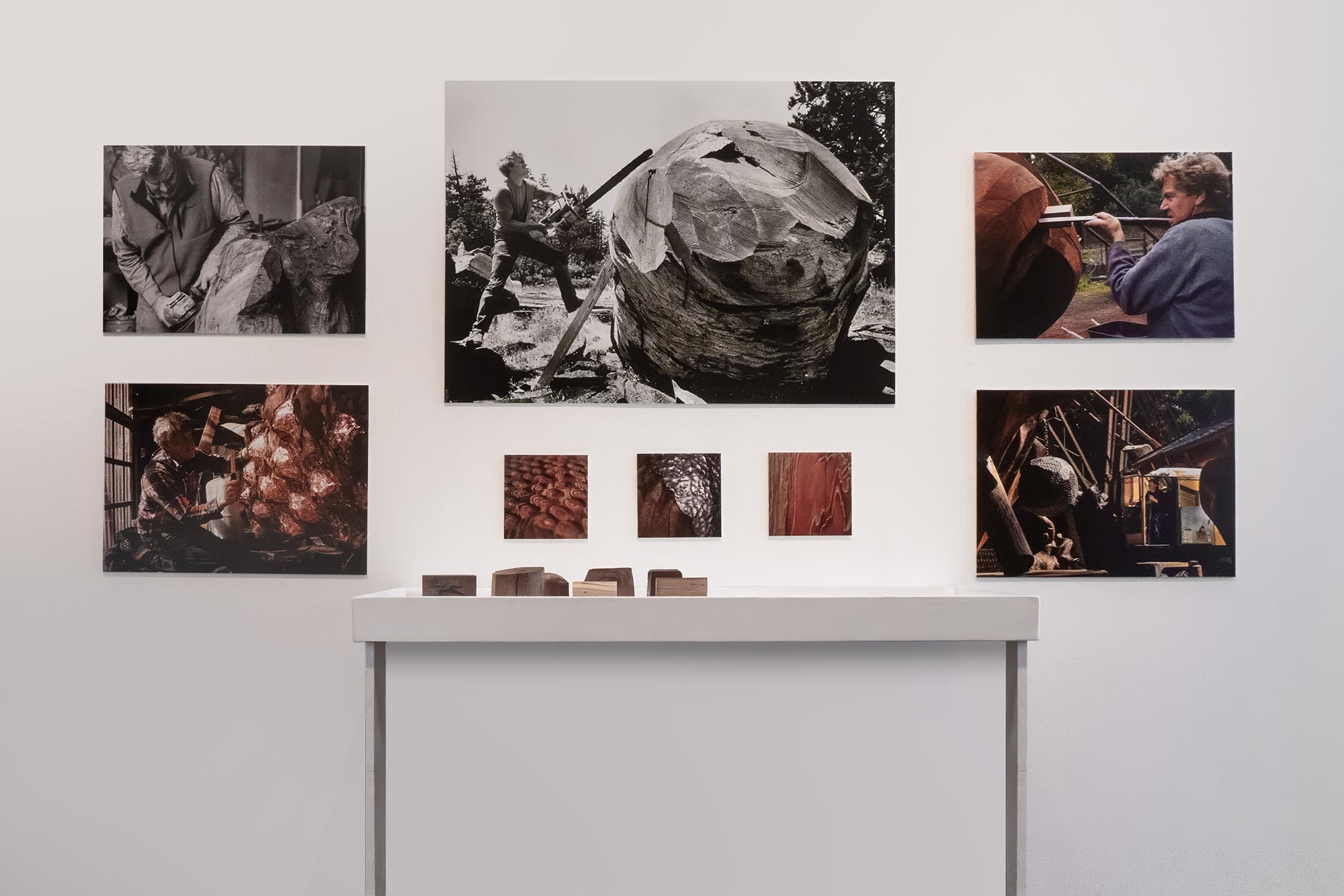
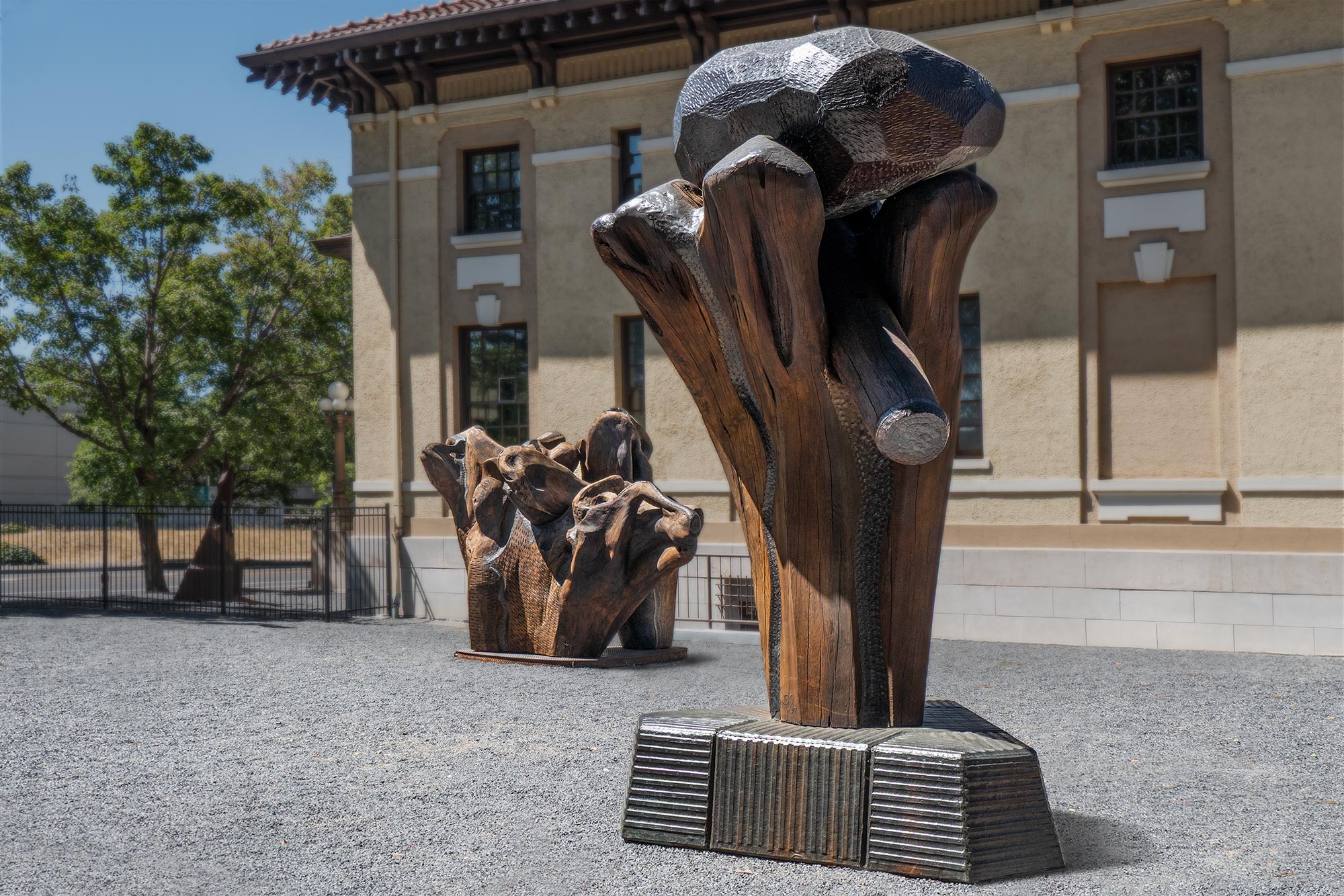
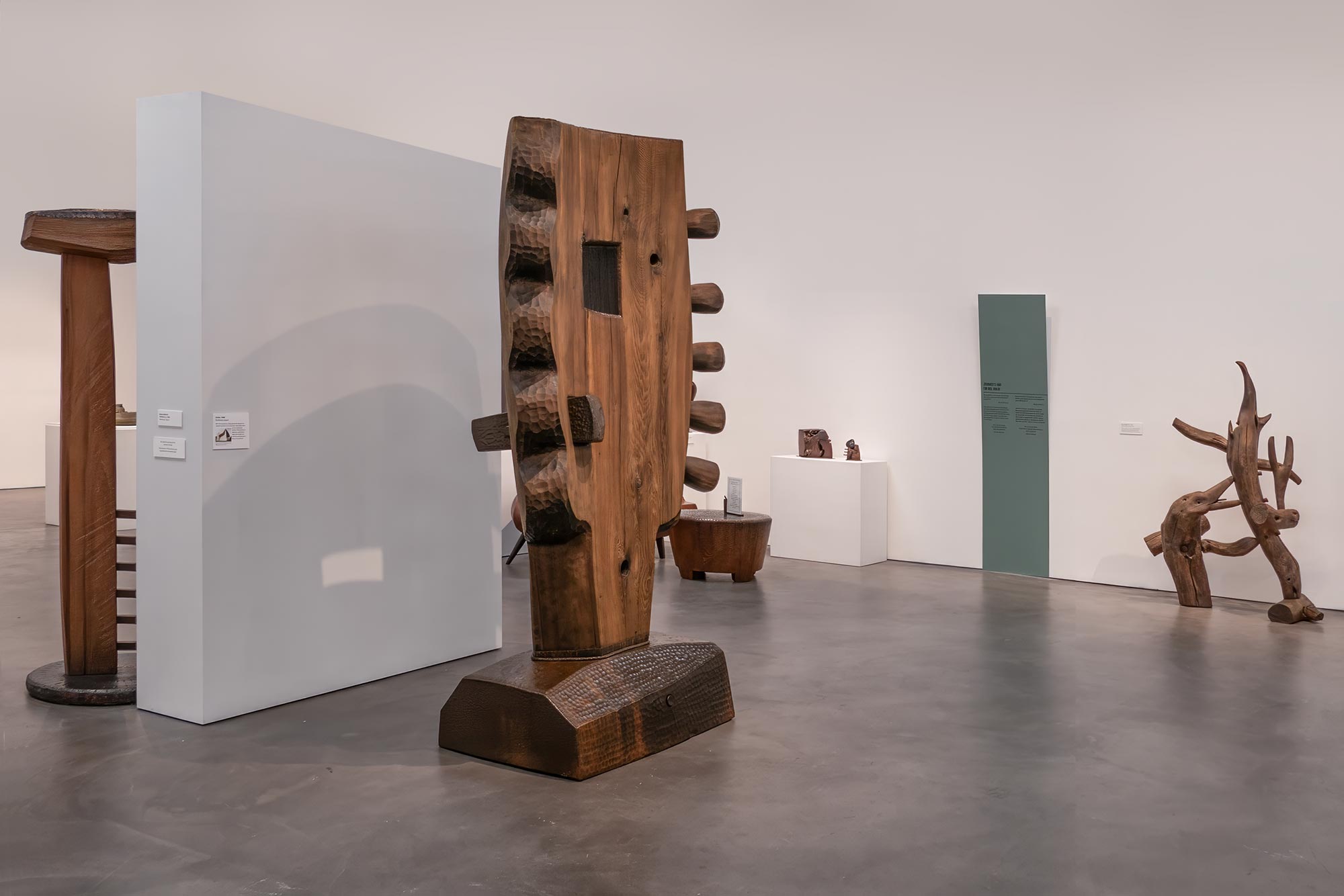
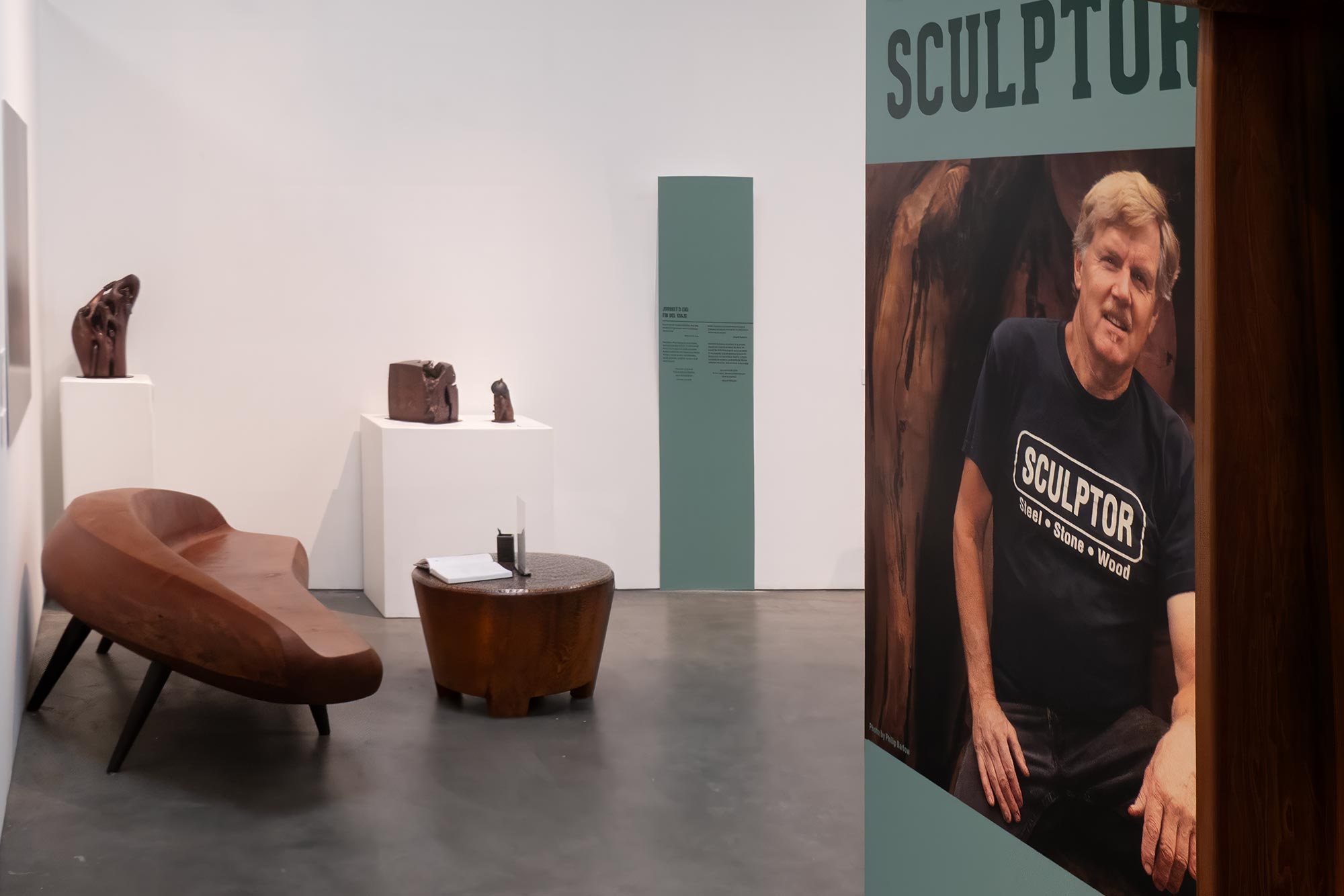
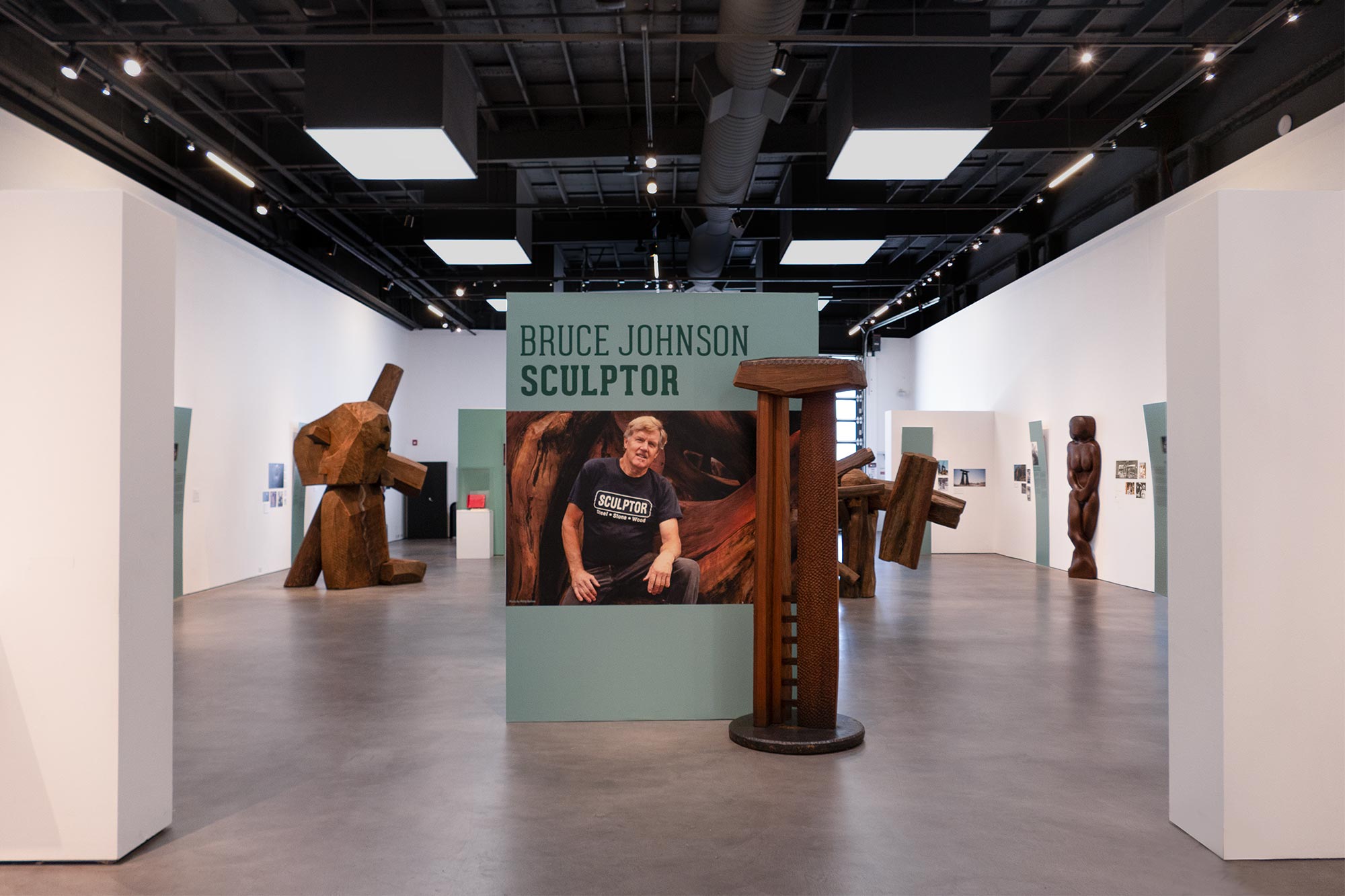
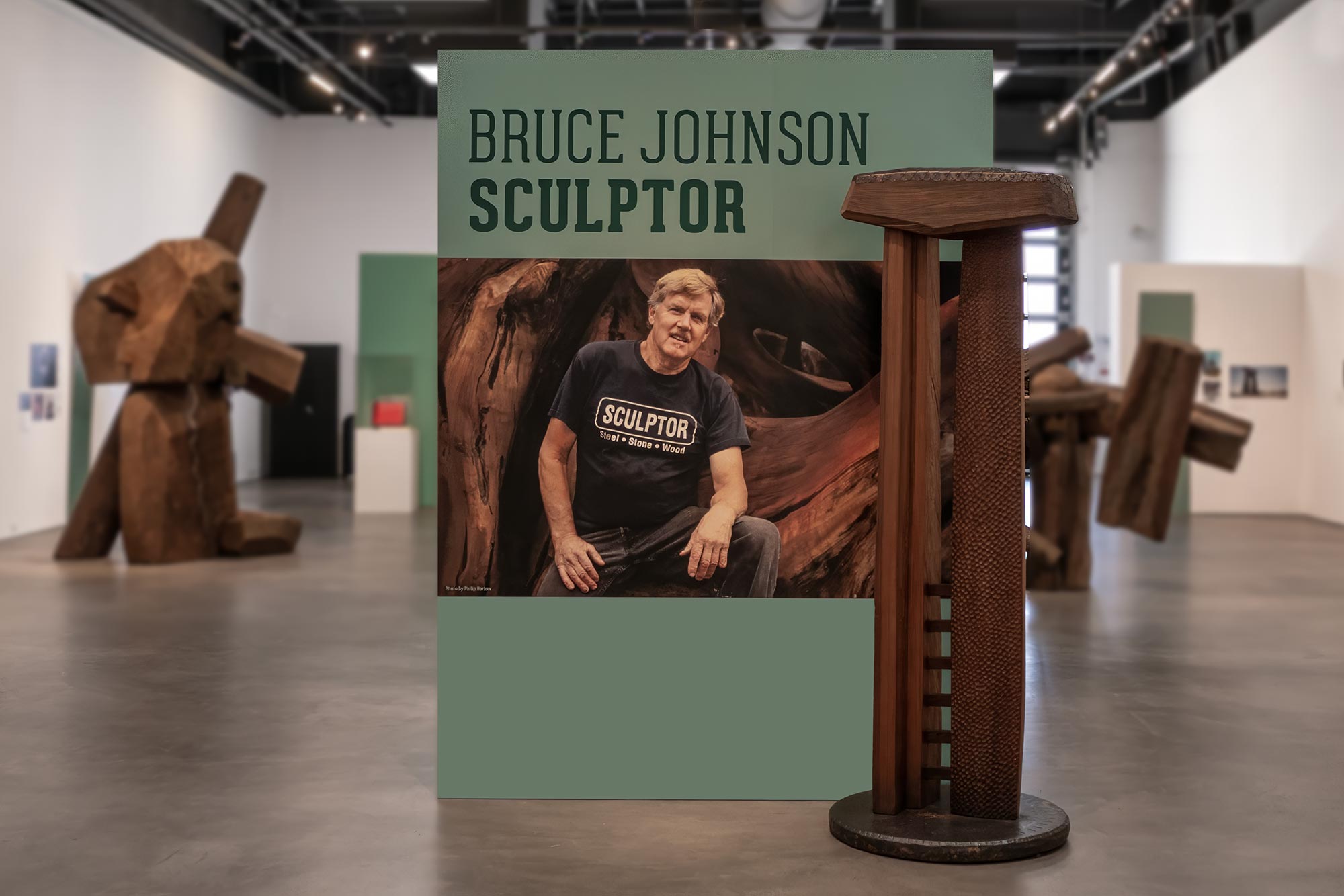
With a chainsaw and a chuckle, Bruce Johnson (1947–2023) created monumental sculptures from salvaged redwoods at his Timber Cove studio on the Sonoma Coast. Bruce’s creative energy was deeply rooted in his profound connection to nature and materials. He called his use of salvaged chunks of wood “small acts of preservation.” Bruce was more than a sculptor and craftsman: he was a vital force in the Sonoma County art scene with a career that spanned over fifty years.
This exhibition - the first museum survey after his death - explores Bruce’s artistic journey, from his early years as a figurative sculptor to his development of an abstract, monumental, and architectural style. It is the hope of the curator and Bruce’s family that visitors to the exhibition are rewarded with a deeper understanding of Bruce Johnson and his journey as a sculptor.
- Catherine Daley, Guest Curator
Bruce Johnson's Formative Years
Bruce was a baby boomer - he and his twin brother, born in Portland OR in April, 1947 moved to SF Bay Area when still a young child.
Our aunt and uncles said he was always making stuff – with found objects at home, and during summer trips to driftwood-strewn beaches in the Puget Sound.
A memorable summer working as a ranch hand in Montana showed him a love for physical work.
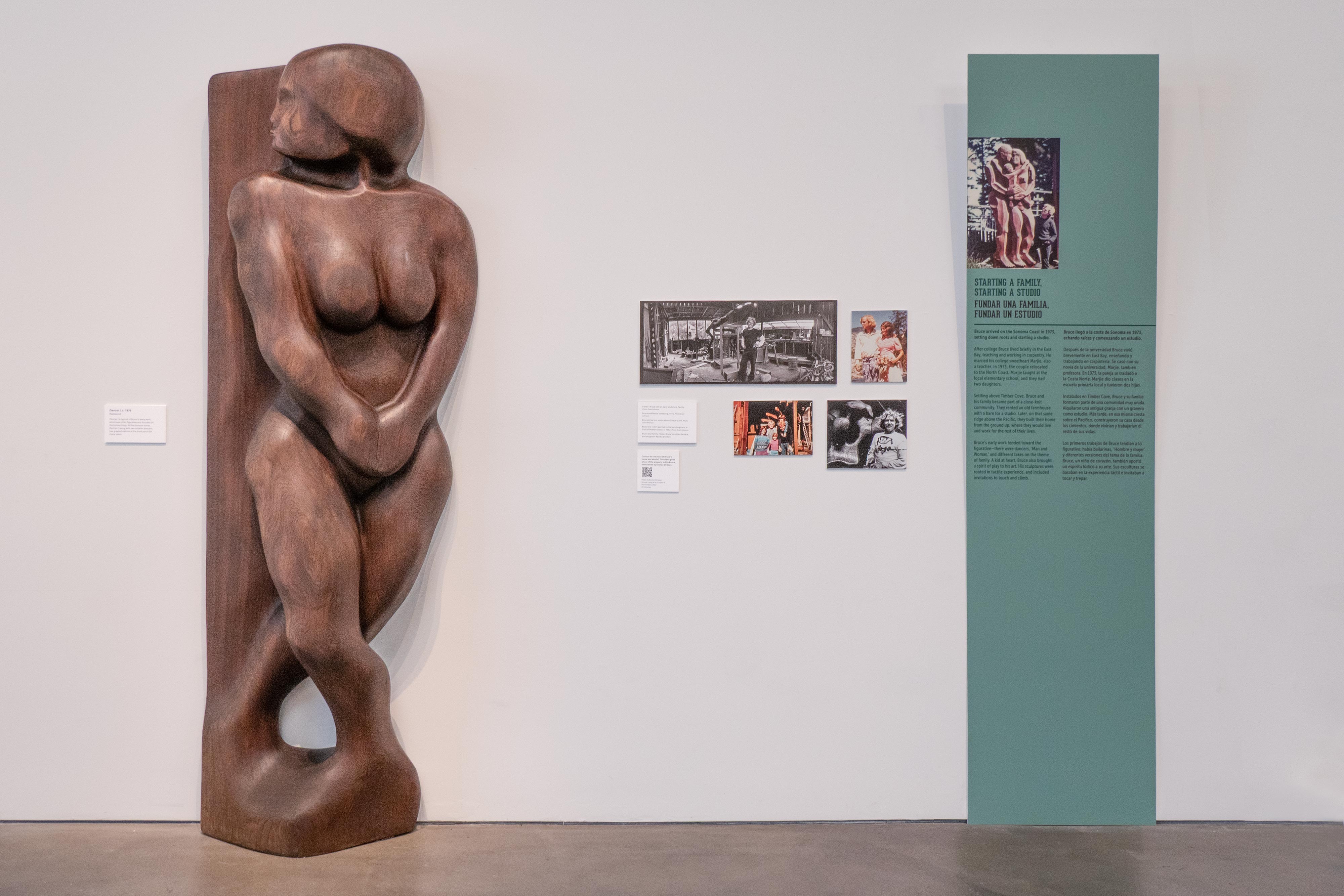
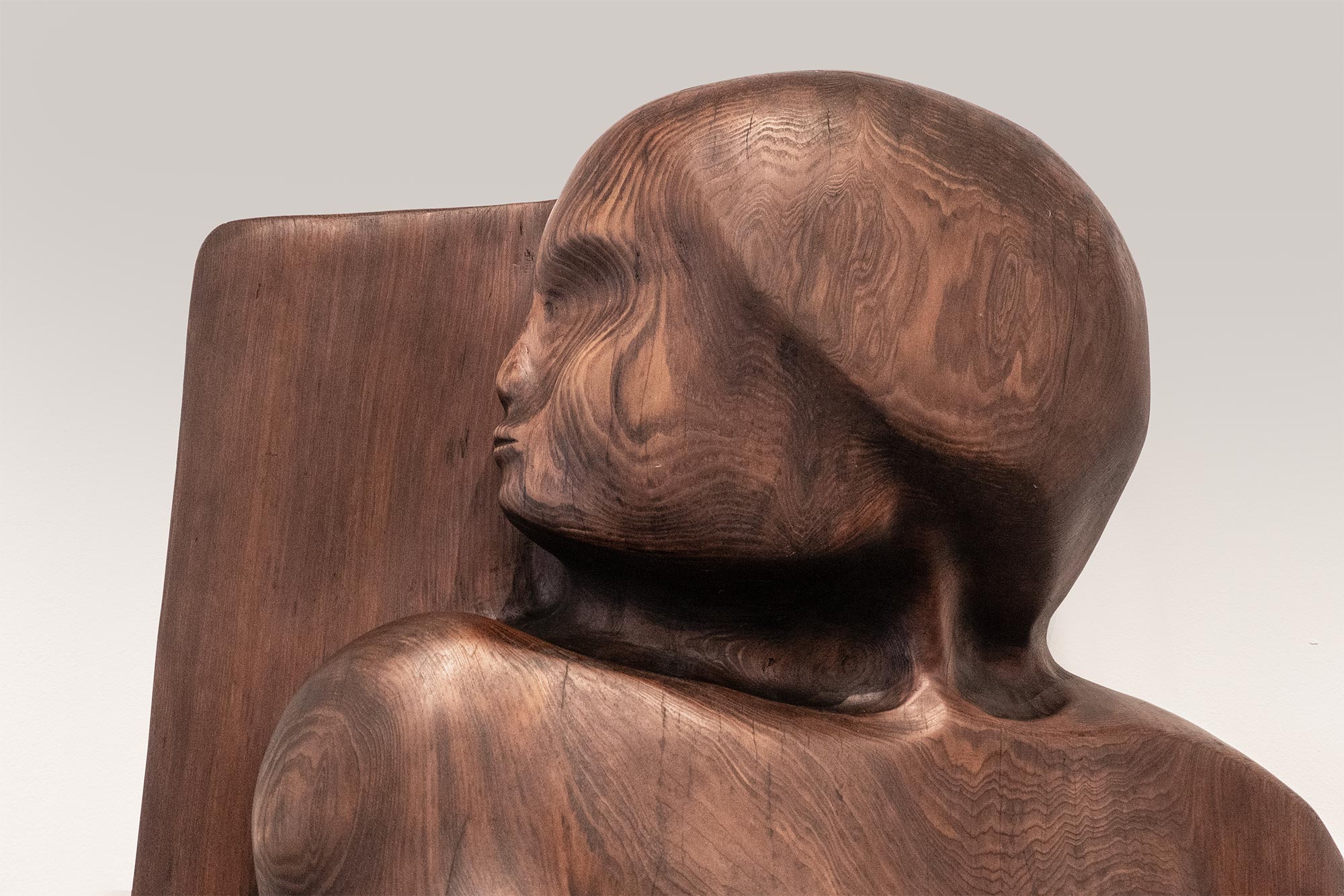
Later in his teens he visited Humboldt Bay after the largest north-coast flood in recorded history – forty feet of gravel in some areas, mountains of redwood stumps, roots wads and beautiful burls. “The ocean of materials thrilled me,” he wrote. “I packed my car full of fine pieces and spent the rest of the summer making feminine torsos.”
In 1966 started college at UC Davis. He joined the cross-country team. His mom thought he should be a doctor but he enrolled in a sculpture class instead - immediately hooked.
KJ UCD grad school - Isao sociology 40 yrs prior: “Wasn’t he the art student who made that giant slab table in the middle of the quad?”
Against a backdrop of 1960’s counter-culture, Bruce found himself working with the emerging “Funk Artists” of the day - Davis faculty like Bob Arneson and Roy de Forest. He was greatly influenced by their zany and candid approach – along with Manuel Neri, Ruth Horsting and other greats of that department.
In 1969 Bruce was included in his first group show, Fifteen Young Bay Area Sculptors, in San Francisco.
“Bruce was a peacenik. He protested the war in Vietnam, but right in there during the draft. He was arrested for protesting nuclear weapons research at Lawrence Livermore Labs… so many were detained, he used to tell us, that they filled a gymnasium, and Wavy Gravy organized a talent show.
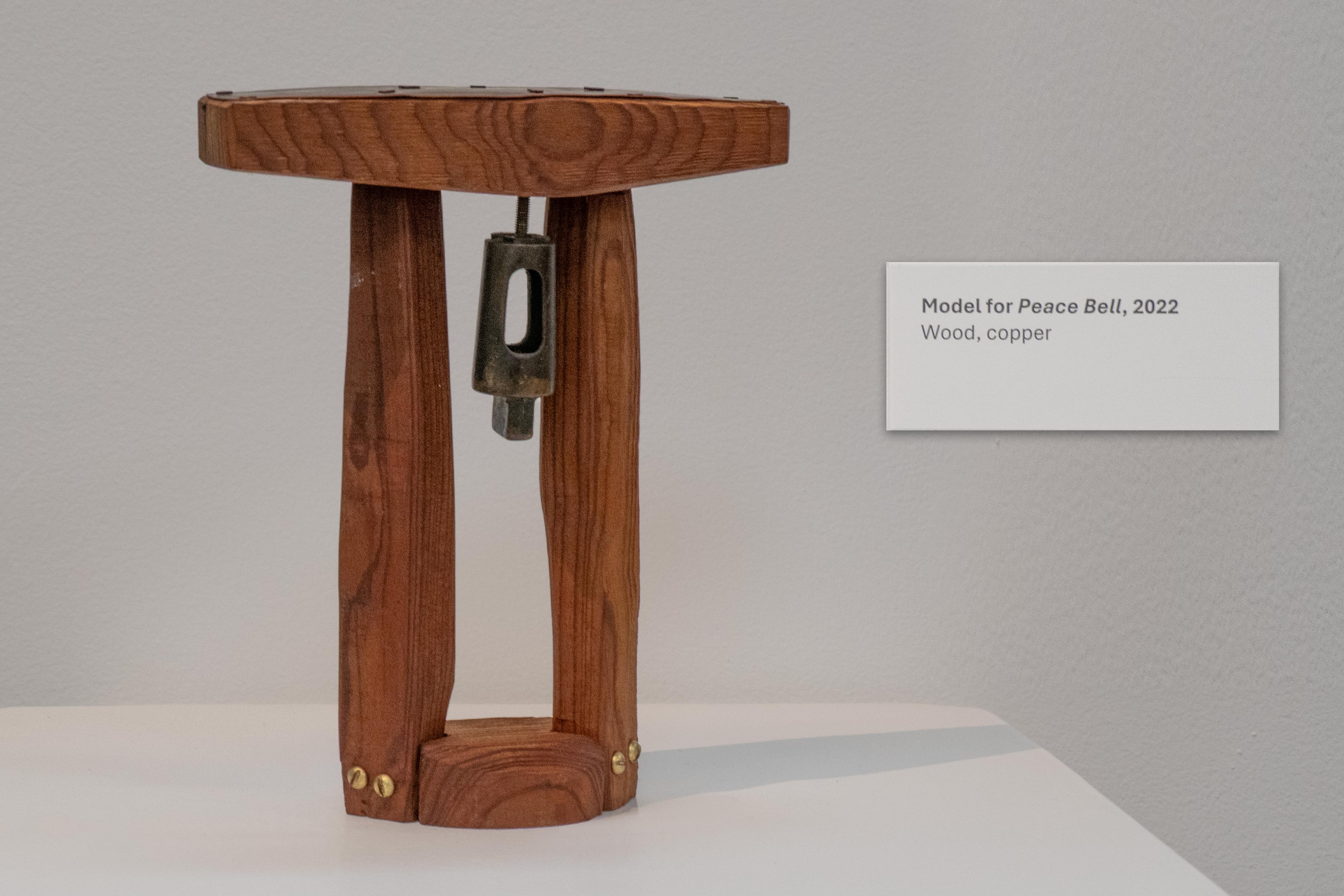
A copper holiday card in the 2000’s read LOVE DONT MAKE WAR; and the Peace Bell would be his last work.
Bruce would sing while he worked, while he drove, while he put us girls to bed. Lots of Woody Guthrie and Bob Dylan. Two of his favorites still echo their relevance - “I don’t want your millions, Mister” and “All they will call you will be Deportee...”
He would be out there with a sign today.
Bruce finished college, got a teaching credential and moved to the East Bay to teach and try his hand at carpentry.
1972 he married his college sweetheart, our mom Marjie. They relocated to the North coast when Bruce got work at Fort Ross.
Marjie took a job at the local elementary school and they rented a rambling 1880’s farmhouse, with a barn and meadow that served as a studio.
Had two daughters and became part of a close-knit community of artists, builders, ranchers, homesteaders, tradespeople and other professionals. On that same ridge above the Pacific they later built a home, where they would live and work for the rest of their lives.
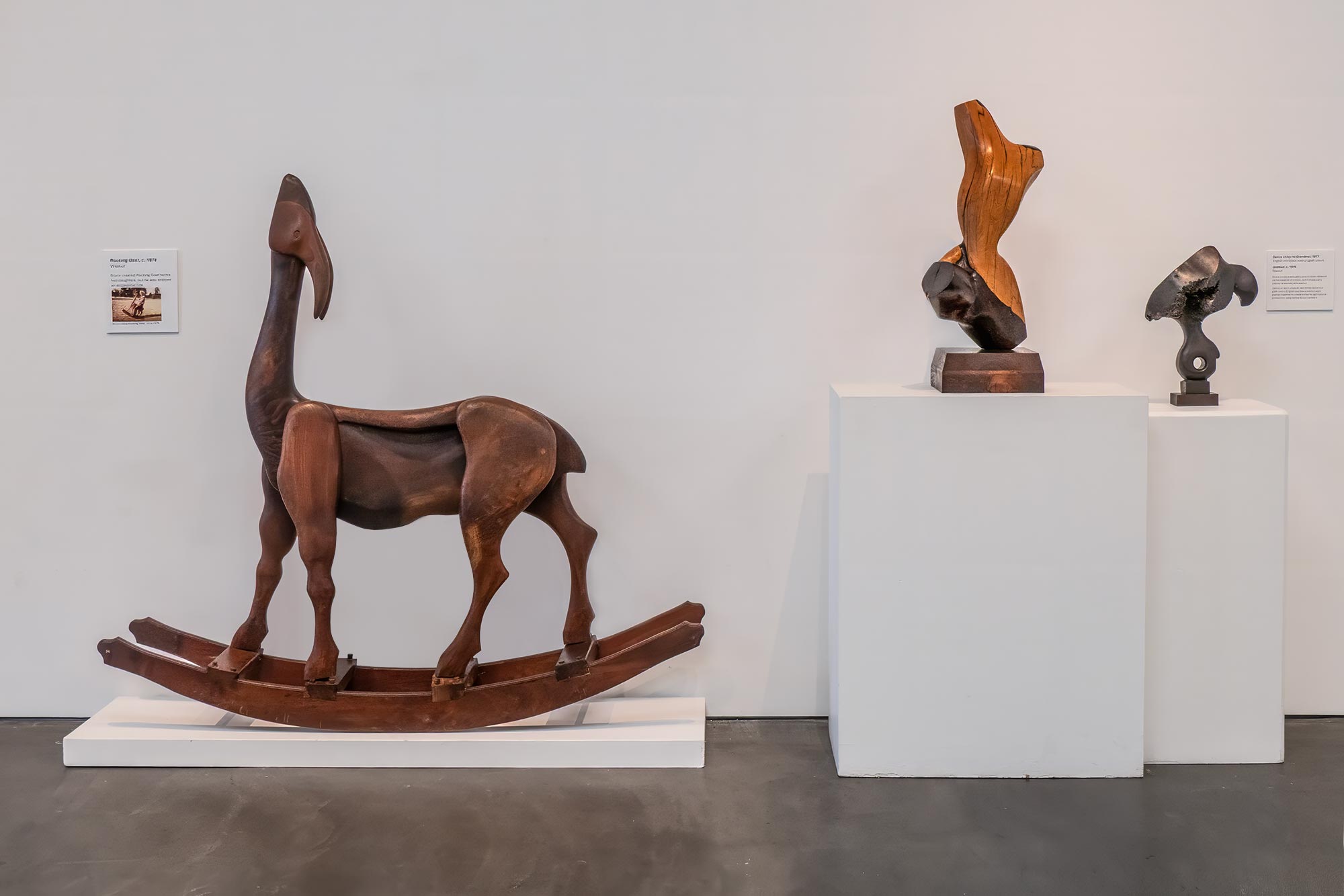
Bruce worked as a carpenter to support his new family, but Marjie’s steady salary eventually allowed him to try his luck as a full-time artist. Bruce’s early works tended toward the figurative – there were Dancers amd Man and Woman - both figurative and abstract takes on ‘Family.’
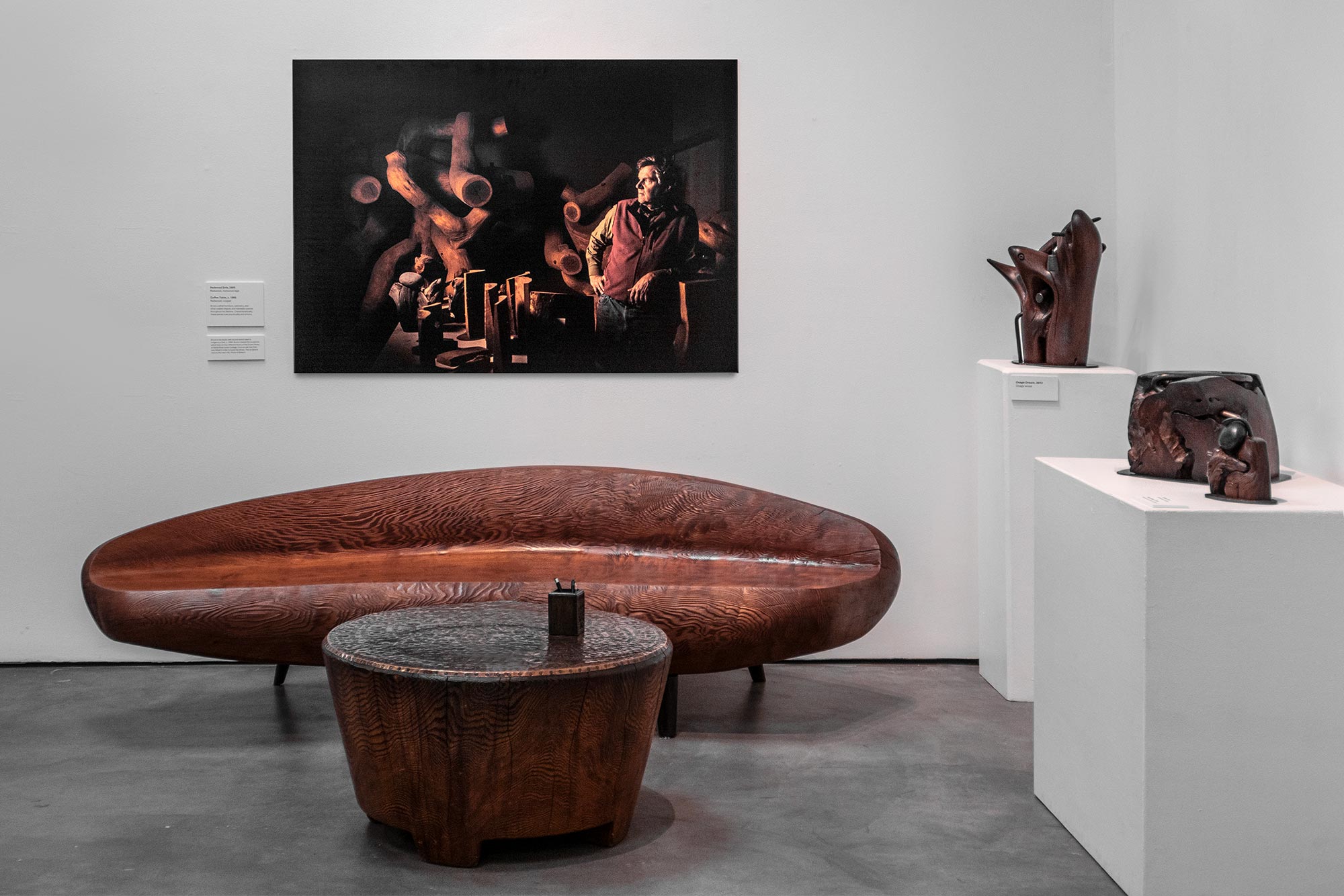
As athlete & builder, Bruce had a great physicality that he brought to his work. Wood is like muscle in a way; Bruce’s sculpture brought this out. A kid at heart, he made lots of tactile, whimsical furniture and sculpture early on – whether a cradle shaped like a cow, a Rocking Goat, or an organic root-wad climbing sculpture fitted with saddles and hand-holds, inviting exploration.
Craftsman, Designer, Master Builder
Bruce joined Deva Rajan and Canyon Construction on the restoration of Fort Ross on the Sonoma Coast - Russian Orthodox Chapel and later 2 other buildings, utilizing traditional joinery and working with massive redwood timbers. He gained valuable work experience in building and craft, deepening his love for wood as a material.
He spoke often of a philosophy of work he developed those years and in turn, would mentor the youth and employees who came through his studio.
An extended trip to Japan in 1983 solidified Bruce’s interest in Japanese art and architecture, and deepened his appreciation for Japanese building methods and tools - an influence that prevailed through his career.
In 1984 - construction foreman on The Sea Ranch Chapel .
You can see his mark on the Chapel’s hand-hewn benches and posts, smoothed beyond sanding by the touch of countless visitors’ hands.
Bruce returned to building and design throughout his life – highlights being his own house, his masterpiece Poetry House, and the recent Fencepost Zendo. He built doors, tables, lamps and gates on commission, and gardens in collaboration with landscape architects. He built exquisite furniture for his own home with Marjie, and graced his friends and daughters with small and large constructions until his last days.
“I made some important changes (around 1978)” he wrote. “In the spring I traded with a local rancher for a hillside of redwood stumps, and I purchased a large boom truck to move and handle the materials. I worked all spring and summer, and it was surprisingly easy and natural to work on a large scale. I set aside the human figure but not the human impulse to make art that moves the spirit. My new work was simple, bold, direct and abstract, combining large pieces of wood with granite boulders, heavy rope, structural steel or other large pieces of wood.”
Settled in his rural studio with a stockpile of salvaged redwood, Bruce pursued his love of mass and scale.
He worked in a large grassy meadow, primary tools were chainsaw and crane.
Torii gate, acquired by the Djerassi Foundation, was the most monumental of this series and the first of many gate forms that would show up throughout his career.
His friend Bruce Beasley wrote to him : “You took on a difficult path of using forms from nature that are inherently beautiful in themselves. Not so easy to add your own vision to that and yet keep the magic of the nature in what then became your own expression… You kept the power and drama of the natural object while turning it into a new and personal work of art.”
Bruce worked with a variety of materials – in Davis there was black walnut, and osage orange. He worked in locust and oak, rope, stone and steel, but redwood was his jam.
Sometimes he painted wood, sometimes burned it.
To protect the wood further, but also as a way to add detail and depth, he began using copper sometime in the ‘90’s. He’d use rolls of sheet copper roofing material. Cut shapes, pound to form to the wood, nail artfully with copper boat nails. Great summer job.
The raw root wads and stumps he favored have to be debarked and cleaned off… “First I peel away the dirt and rot and look to the mass, form and texture to inspire and inform the sculpture.” A big piece can take two men 10 days to clean, working full time. First the piece is pressure washed, and then various tools are used to scrape and clean. Because the typical piece contains many nooks and crannies that are difficult to reach, the cleaning process is challenging and time-consuming.”
He’d use chainsaws, boom truck and a crane; hammers, chisels, brush sanders, and so many more. His shop was a disaster.
Major Acquisitions & Solo Exhibitions
After moving to the home that Bruce and Marjie built together on the same coastal ridge and building a new studio, Bruce continued a period of work from the 90s to 2000s of large scale sculpture inspired by the redwood material at hand
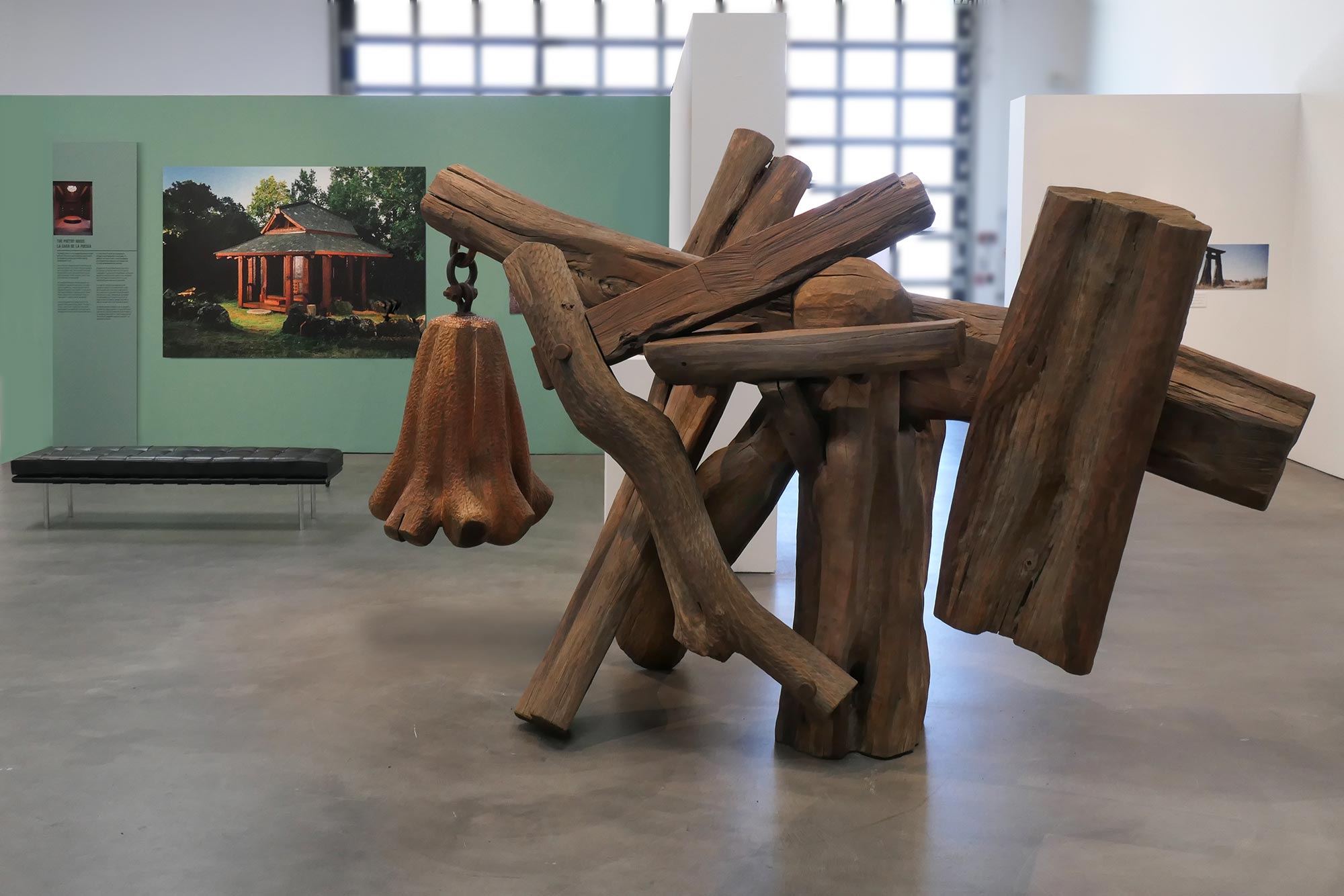
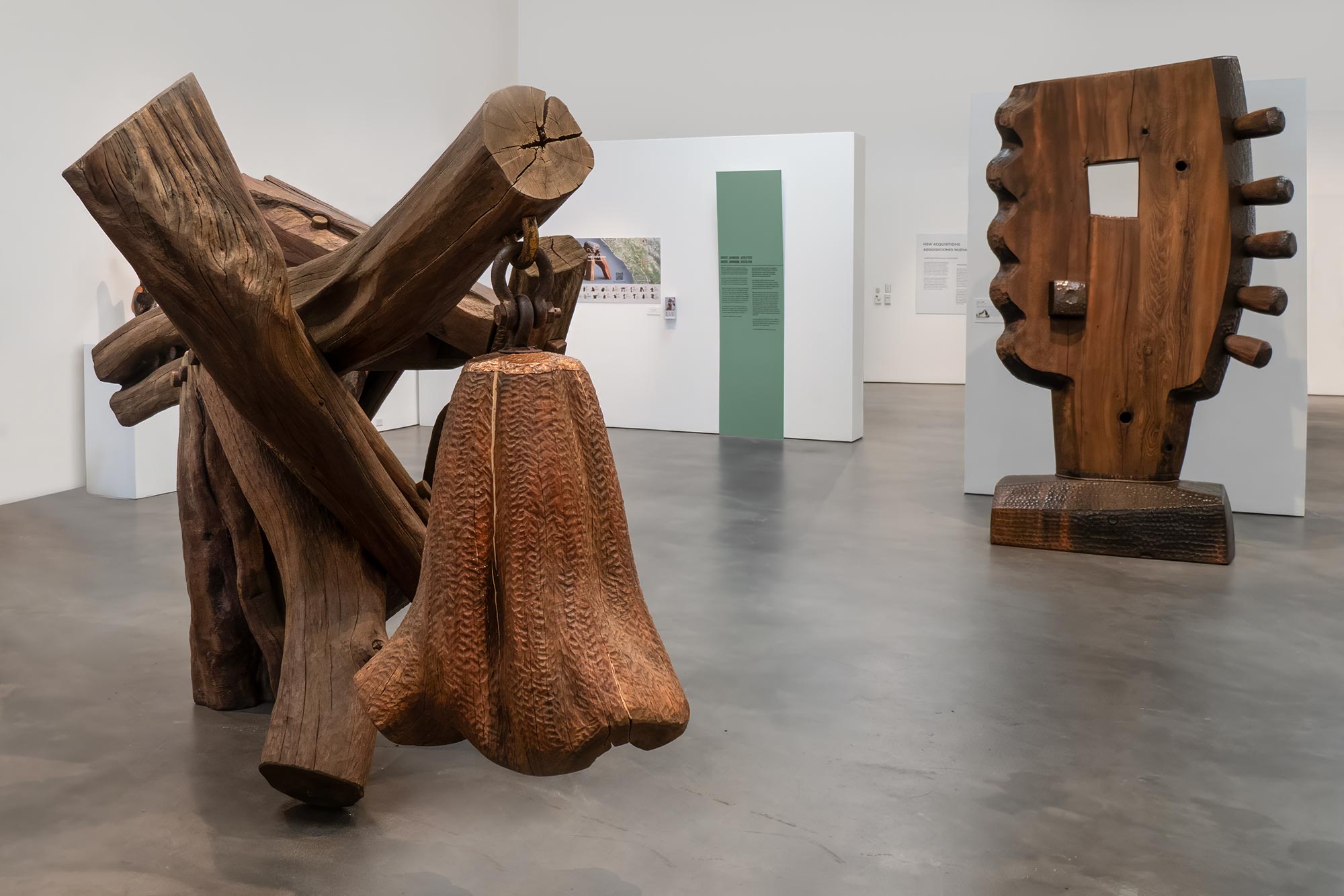
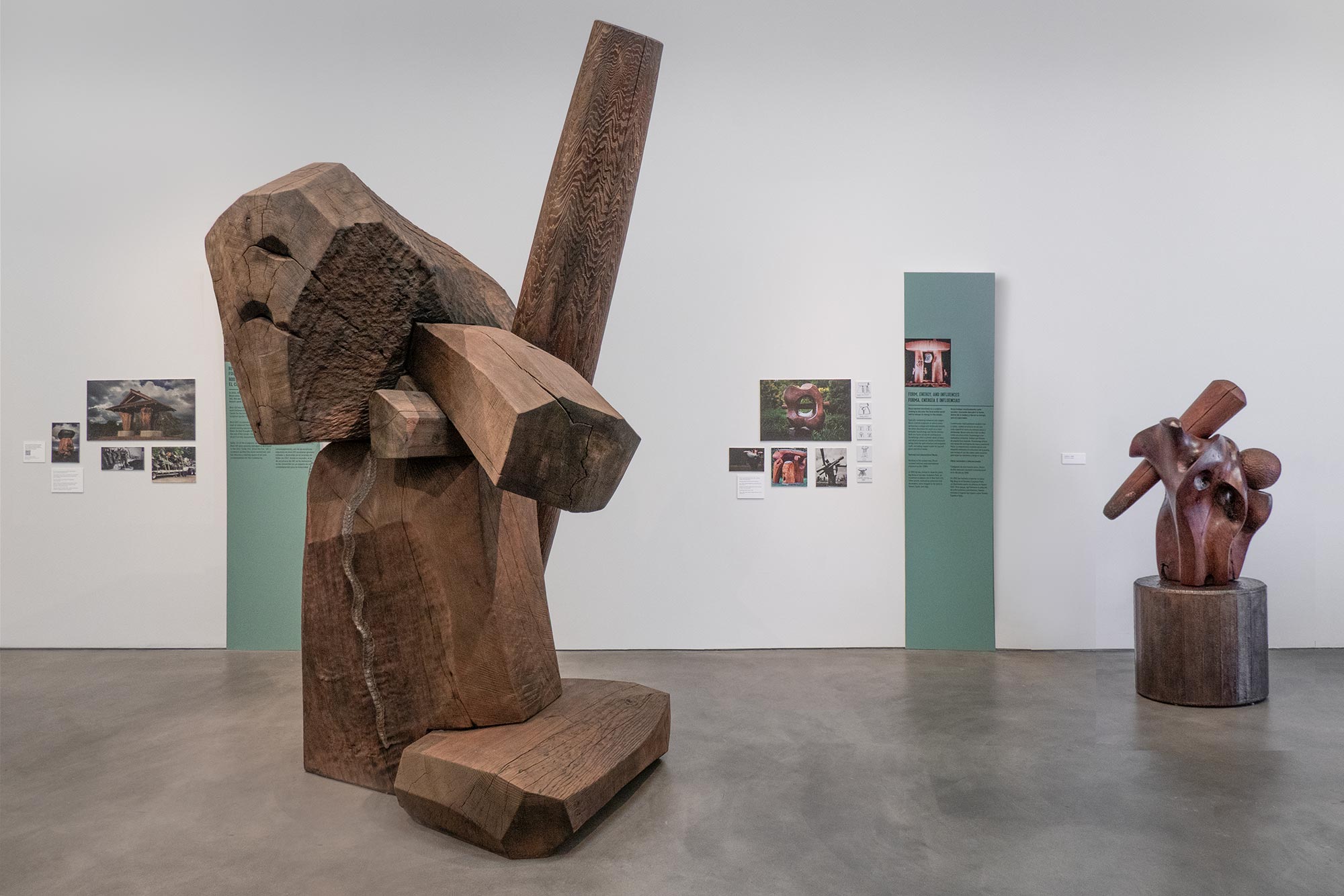
He worked intuitively, looking to discover the form within the wood and to release its energy to the viewer. He described his work as a cross between Shinto shrines and Stonehenge. From Stonehenge comes the primal sense of scale, mass and physical presence; the Shinto influences are elegant craft and exquisite detail of sacred architecture – including using copper as scales to cap end grain and direct water or to create copper boulders. Every copper or wood surface has a unique, deliberate texture.
He was fortunate to find homes for his work around the word. In 1992 Marc DiSuvero, a friend and colleague supported him to bring the piece Big Bang to the Socrates Sculpture Park in Queens, NY - a piece that now resides as Cedarhurst Scupture Garden in Mt. Venon, Illinois.
A series of large pieces went to Taiwan, Spain and Italy.
He spearheaded a number of large solo shows in these years in Sonoma County at Paradise Ridge Sculpture Garden and the Quarry Hill Botanic Garden.
In compiling these materials the sheet volume, productivity and tonnage of work is staggering
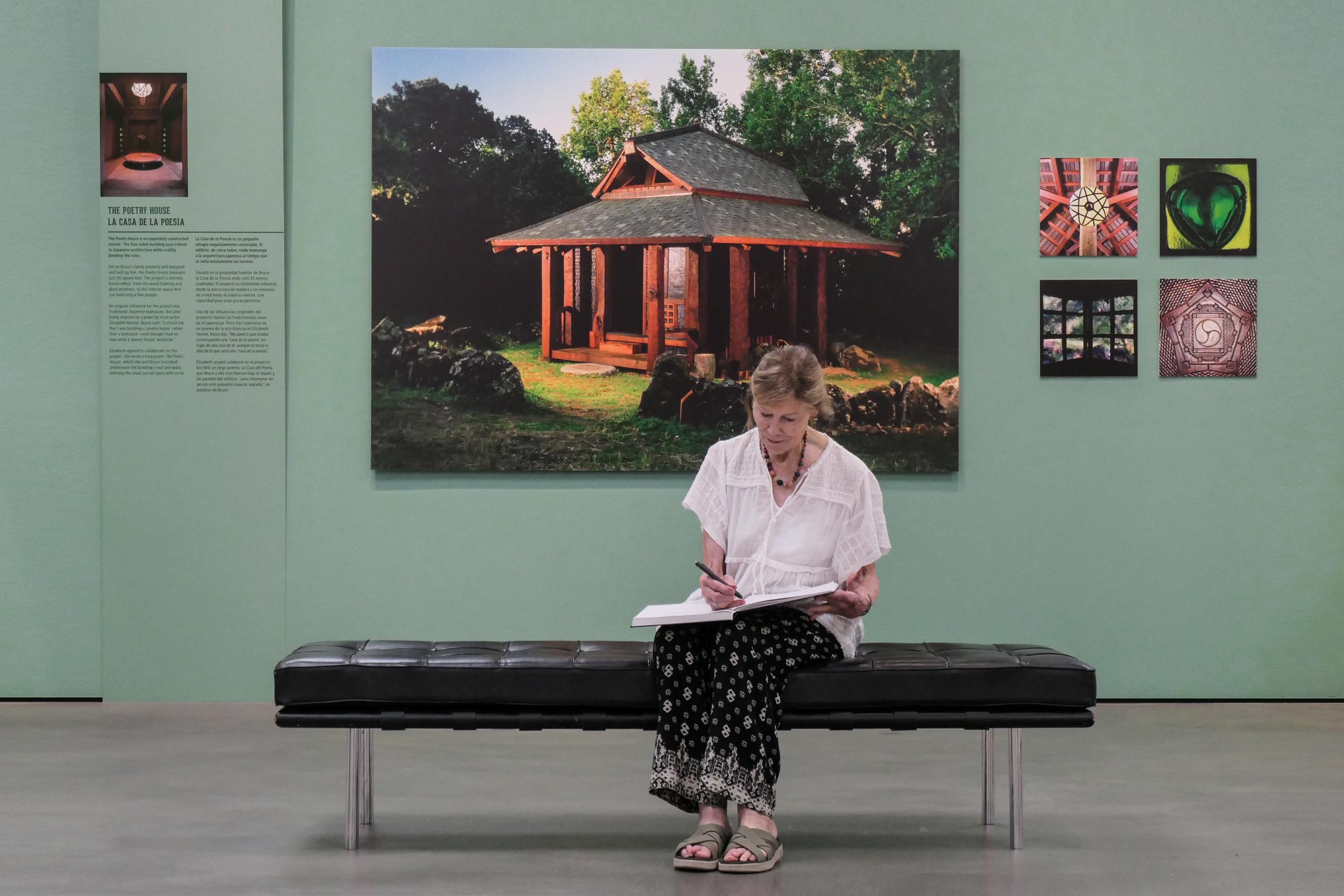
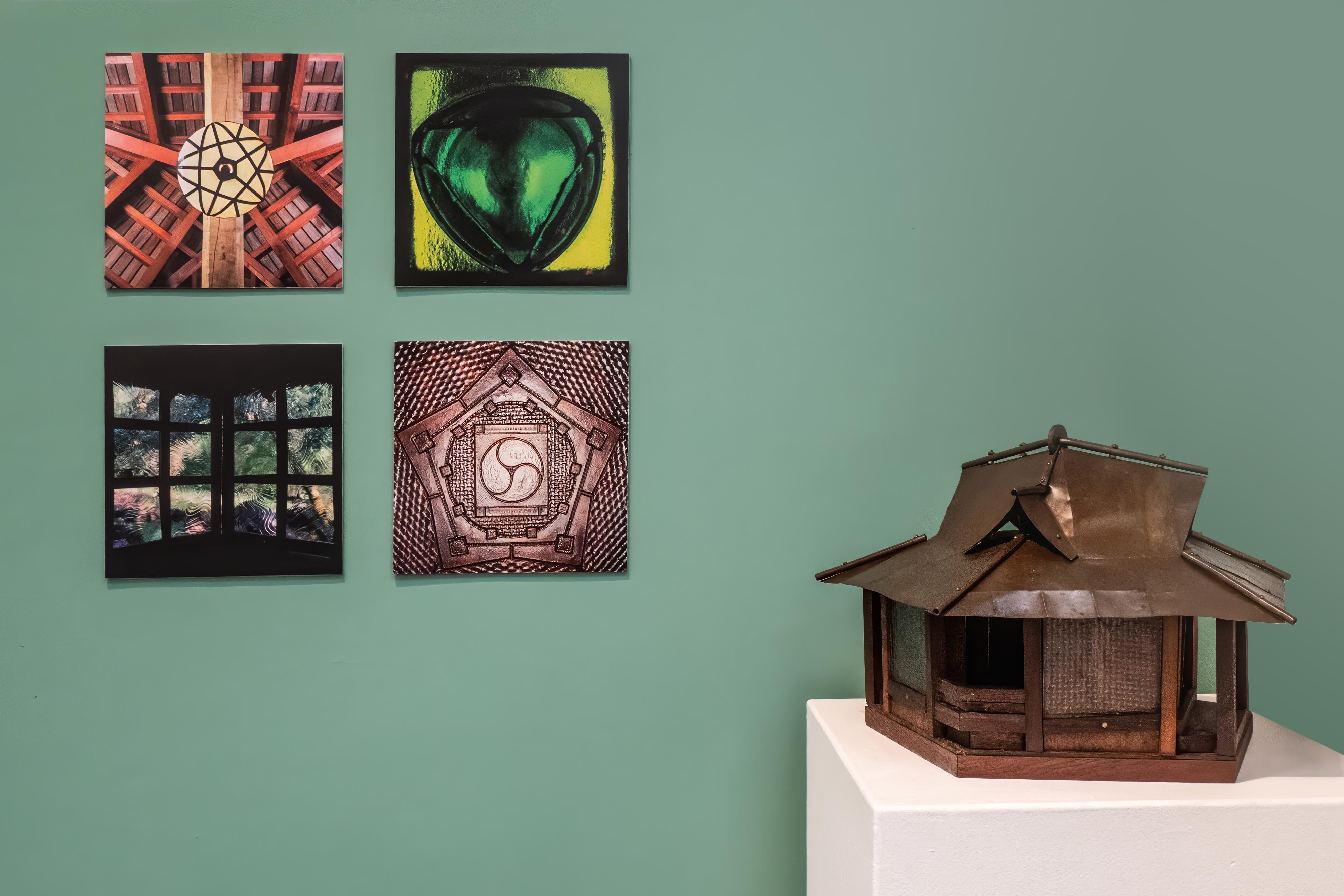
It was in this same era that he began work on the The Poetry House, A five-sided 50-sq-ft. sacred building
He wrote:
“For more than two decades I had the urge to build a sculpture/building that would be a space for reflection, simplicity and spirit. Years ago, while working on the small nondenominational chapel at Sea Ranch, CA, construction coordinator Thamby Kumaran told me his dream of building a small temple when he could find time and resources. The idea electrified me and never left. Twenty years later, after selling several large sculptures and coming across some fabulous materials, I gave myself the commission to build a small sacred building."
All of the post and beams and wood paneling were milled from one giant old growth log."
The building was originally conceptualized as a “Teahouse’
Which he wrote “connotes essential, everyday simplicity in harmony with nature.
But it took a new form when I came upon an eloquent poem by Sonoma State University professor Elizabeth Herron at the Sonoma Mountain Zen center. It struck me that I was building a “poetry house” rather than a teahouse, even though I had no idea what a “poetry house” would be. Elizabeth agreed to participate in the project, and she wrote a long poem, The Poet’s House, which we transcribed under layers of roof and the body of the structure to imbue this small sacred space with verse.
The Poetry House comes apart in sections that can be loaded onto a flatbed trailer and moved. It was shown once at The Paradise Ridge Sculpture Garden and he dreamed to find the right home for the building - where it would be both accessible and well-cared for. Currently it resides at his home studio, nestled into the orchard, facing into the forest.
In 2010, Bruce found a massive load of old-growth redwood, salvaged from a gravel mining operation on the Van Duzen River,
It was delivered on two semi-trailers to Bruce’s studio. He thought it might last him the rest of his career – instead he had used almost all of it in a monumental body of work within 5 years.
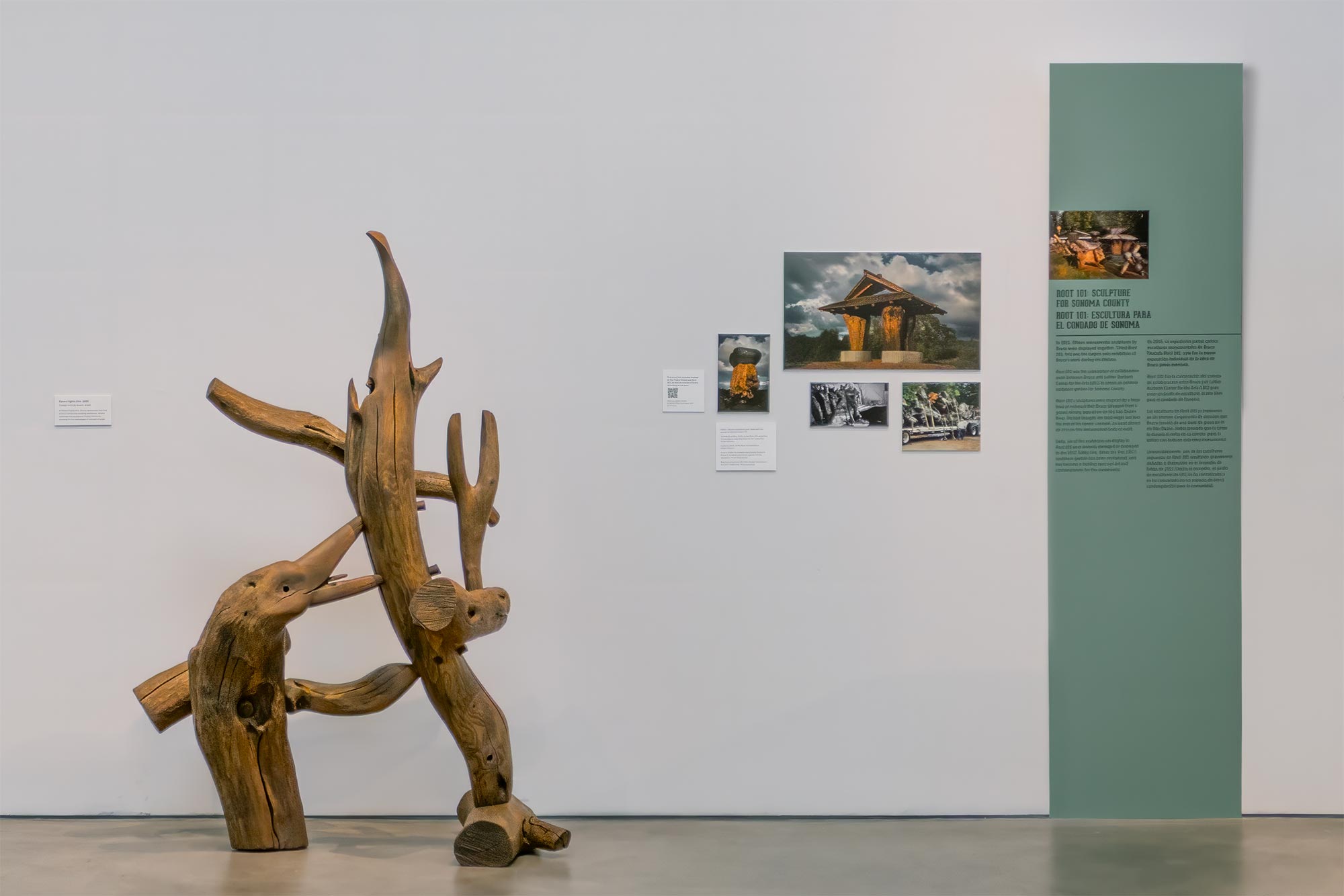
This work made up the inaugural show at the Luther Burbank Center for the Arts Sculpture Garden in Santa Rosa. A show titled Root 101
This show represents the culmination of a career as an artist and a craftsman, of his intimate relationship and mastery with the increasingly scarce material of old growth redwood.
He spoke of this material and the history and stories and time iterally ingrained in it - the stories of wild-west logging camps, the birth of new cities, and watersheds laid to waste. Its material shaped by centuries of rain, wind, fog and sun - marked by raging floods, punishing droughts, and blazing forest fires - emerging each time as a symbol of resilience.
Like Robert Louis Stevenson’s “giants great and still.” These sculptures bring new life to ancient remains. Their bold vitality and touchability engage us with the present, connect us to the embodied energy of ancient forests, and give hope for a resilient future.
Ironically, six of Bruce’s significant works were severely damaged or destroyed in the 2017 Tubbs Fire in Santa Rosa, a year that marked a heightened awareness of climate change, a legacy of logging and poor forest management and questions about the viability of our future forests.
After this major loss - he did what he always in moments of despair - he went back to work in his studio.
One of his final works was the Bell of Great Peace (or simply “Peace Bell”) 2023, a collaboration with architect Ittsei Nakagawa, a survivor of the bombing of Hiroshima.
It was a moment that both men were implored by an urgent call for peace - .
Art was a natural way for Bruce to ‘wage peace’ – for example, a bench in Sebastopol’s Peace Garden, a peace-pavilion made with schoolchildren during the Iraq War, satirical sculptures of Trump in his first presidency, a copper holiday card stamped “LOVE DON’T MAKE WAR.”
The piece was installed after Bruce’s death at the Asian Art Museum in San Francisco, just months before Ittsei passed away as well.
The last six years of his life were marked by a series of great losses including that of his wife in 2021, covid, political turmoil.
He always turned back to his work - Cypress Log and Black Locust, another redwood series - echos of gates and bells and sacred structures always arising.
And it is this energy that remains in his studio - its a place filled with art, filled with inspiration and beauty and curiosity.
Both of our parents relished life, lived big and always in their bodies, and found huge pleasure in the process of building and creating, working and living in their rural Sonoma Coast community. Their home is a place of creativity, hard work, inspiration and love.
We have moved forward with a soft launch of using the home and studio as a residency space in their honor and their inspiration.
Exhibition (wide view)